
Susan English
Into the light

After pummeling you with celebrities two weeks ago (just to see if you were paying attention!), let us return to a real working artist, whom I profiled about seven years back on the original Vasari21 site. It seemed time for an update, so here it is.
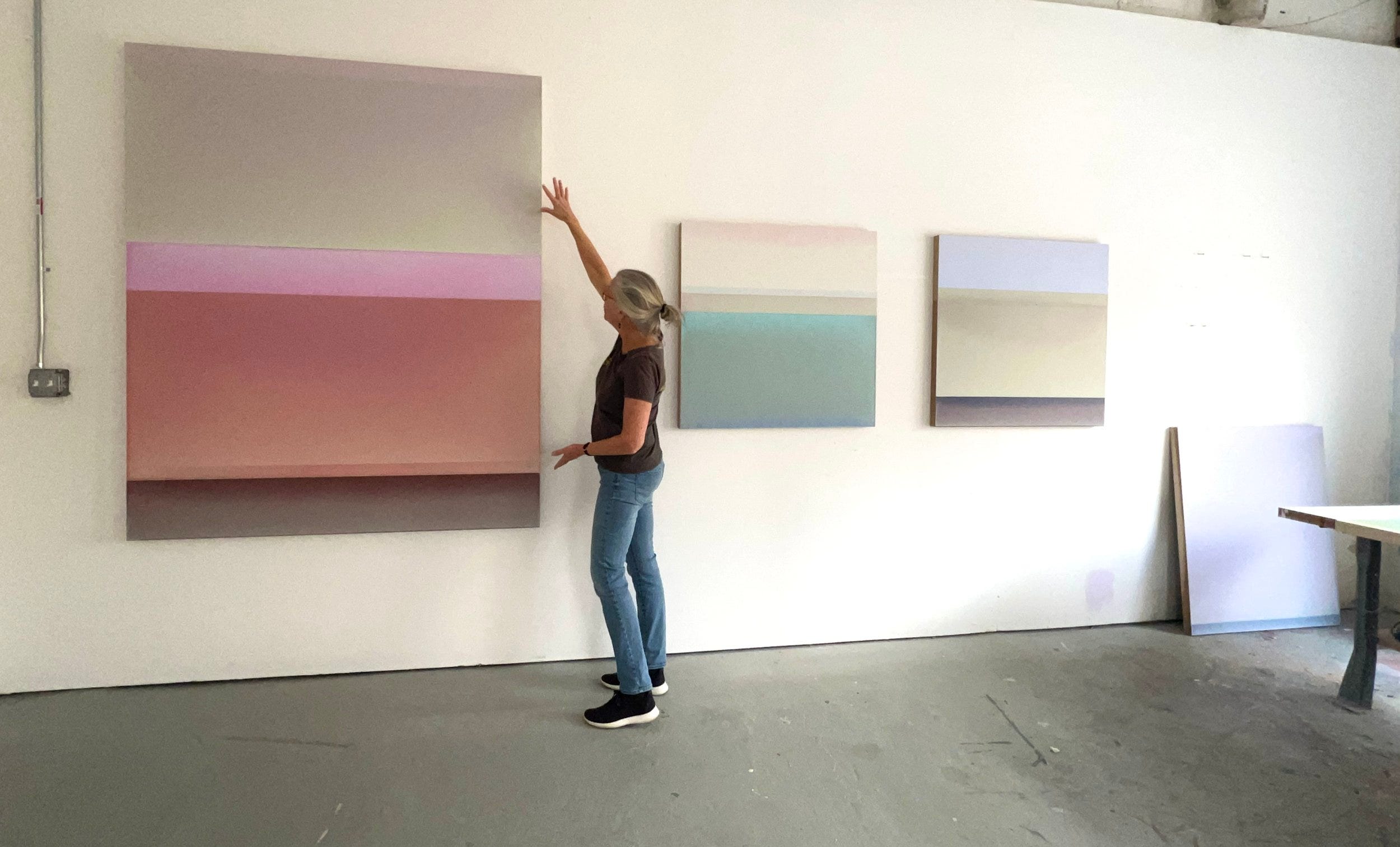
When Susan English was three or four years old, she lived in Belgium with her family for a couple of years. Years later she still remembers a babysitter named Hele placing a candle inside a child’s play igloo. “It made a big impression on me,” English says. “The light inside the snow was absolutely magical and the space seemed to dissolve. I had a visceral reaction to the translucent effect and the dissolution of borders.”
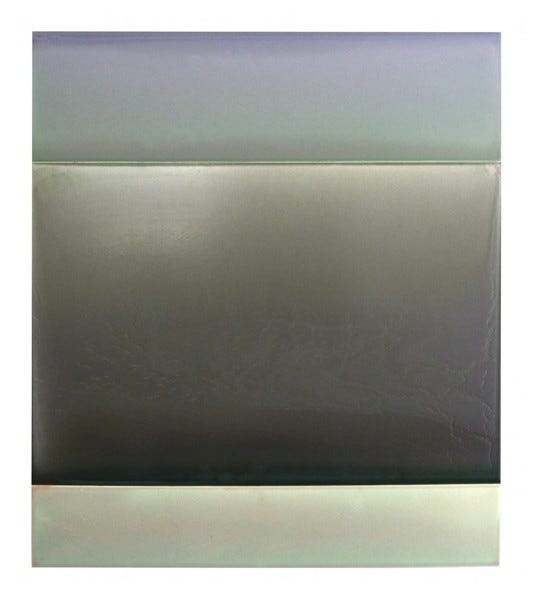
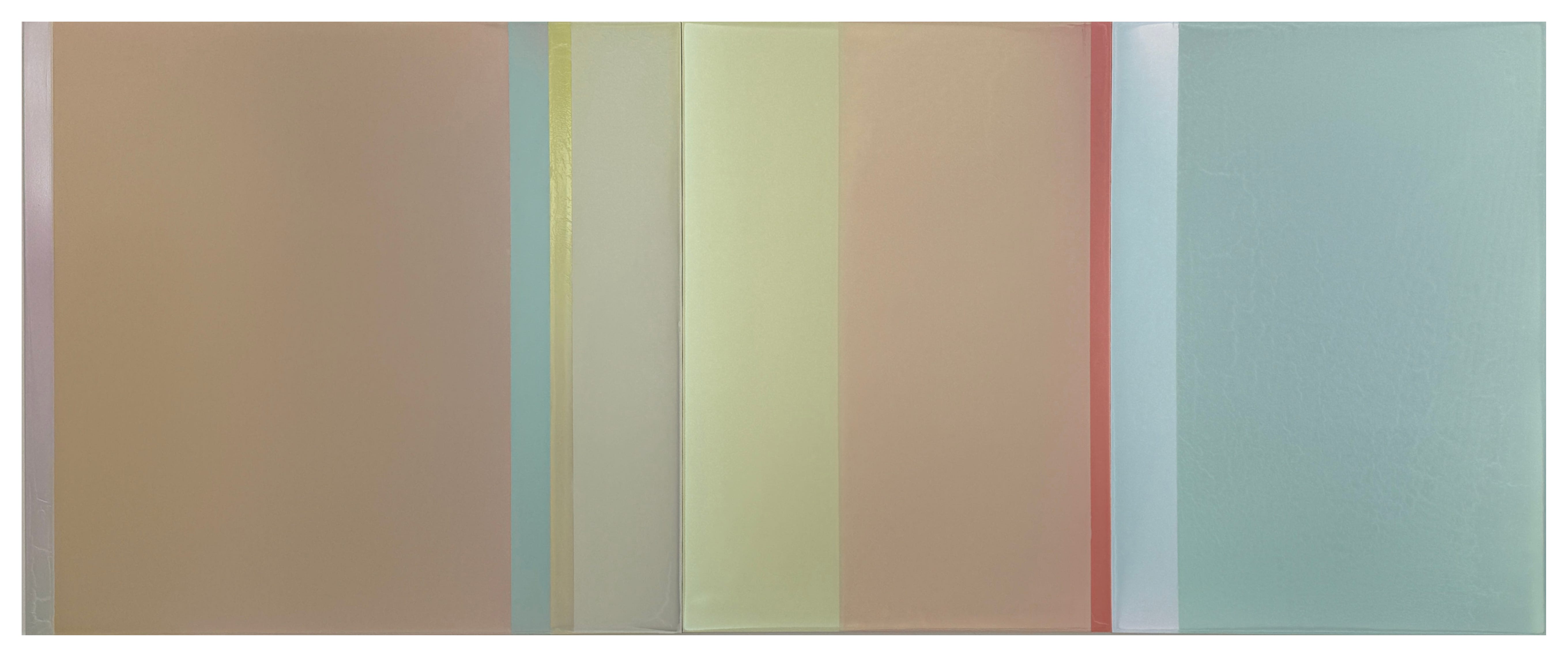
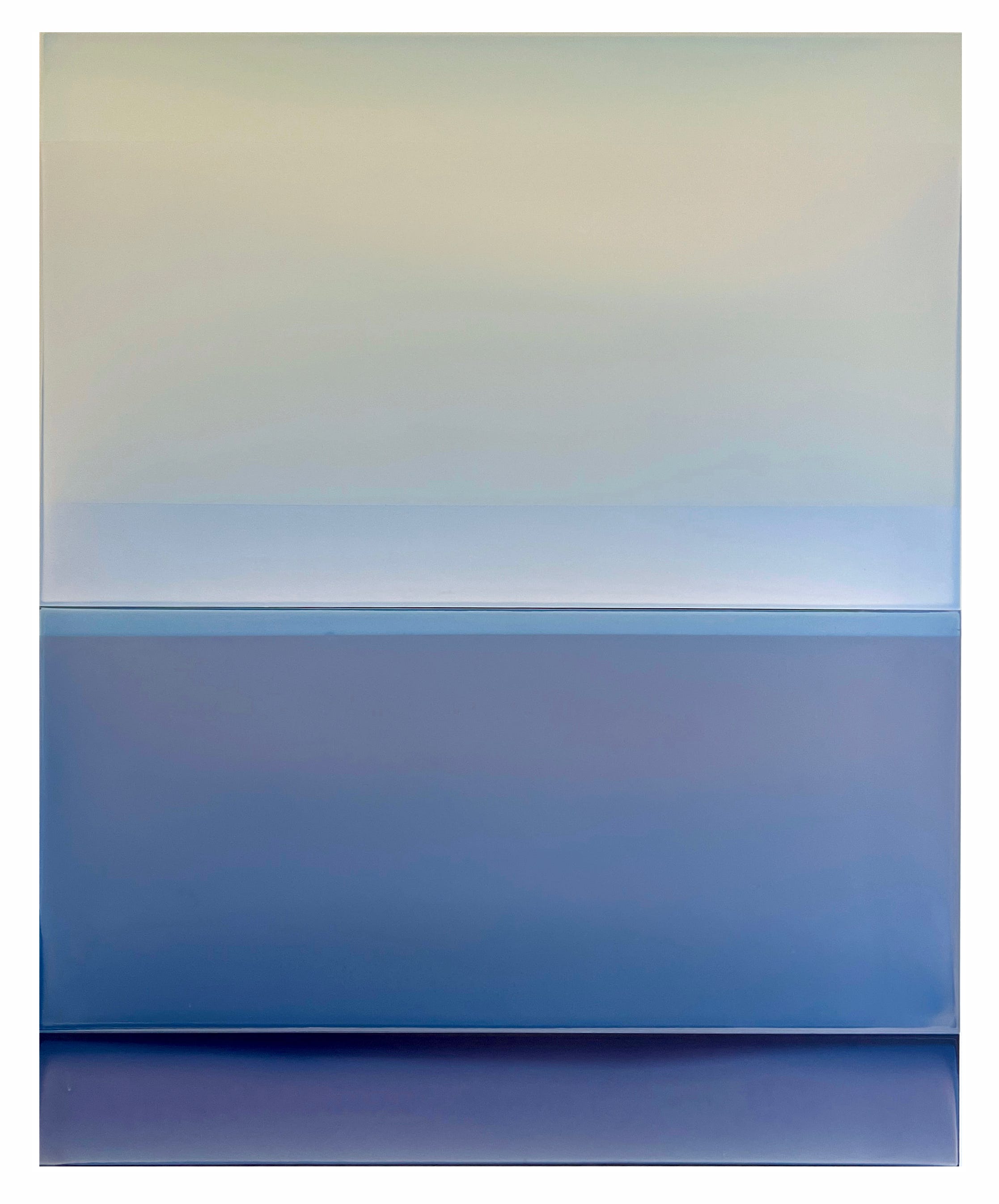
Looking at the artist’s work now, it’s almost uncanny how the qualities that enthralled her when she was barely more than a toddler have resurfaced in her paintings of the last few years. Made of many layers of poured polymer, the works’ “surfaces range from dull to glossy, either absorbing or reflecting the light, existing always in relationship to the light in the room or the position of the viewer,” as she puts it on her website.
By the time she was in high school, growing up in Bethesda, MD, just outside Washington, DC, English knew she wanted to be an artist and was making trips to museums in the nation’s capital. In her senior year, she was particularly impressed by Barnett Newman’s “Stations of the Cross” at the new East Wing of the National Gallery. “There was a painting on every wall in a circular room, and I was there all by myself,” she recalls. “At that point I wasn’t making abstract work, and it would take me a long time to get to abstraction, but it spoke to me strongly. This sequence of paintings suddenly made complete sense to me and felt more ‘real’ than the representational work.”
At Hamilton College as an undergraduate, English ended up a ceramics major and says “there’s a sculptural aspect of my work that probably started there. I made abstract ceramic sculptures based on organic forms. They were tiny and sat on a tabletop. But I never liked the loss of control that happens when you fire ceramics.”
After graduation, she spent a year and a half on Nantucket, setting up a studio in a rental house and devoting herself to painting, making works that were, as she describes it, “a cross between Bonnard and Hopper,” but with no figures and “constructed in a very abstract way.” Though she was picked up by a local gallery and could make a living as a house painter, she was soon off to New York, where she enrolled at the New York Studio School. Her teachers in the rigorous two-year program included the esteemed second-generation Abstract Expressionist Nicolas Carone and Robert Storr, future curator at the Museum of Modern Art. In particular, she was impressed by Storr’s level of seriousness. His course included four hours of drawing in the morning and four hours of painting in the afternoon, five days a week. “He was about understanding painting in a very thoughtful way. He looked at everything, and he talked about everything,” she says. “He had a deep understanding of painting, but was also able to look at and talk about everything that was going on in the art world at that moment. His attitude was truly pluralist”
To support herself, English worked as a decorative painter, doing faux finishes and wall glazes and advising well-heeled clients on what colors would work best in their interiors. “It was fairly lucrative and gave me a lot of flexibility and free time to be an artist.” The job also gave her countless hours of experience working with color, deepening her understanding of its subtleties and complexities—a preoccupation that is central to her mature work.
When she entered Hunter College to pursue an MFA in 1987, the artist stepped into a minefield of opposing opinion in different academic camps. Art historian Rosalind Krauss, whom she describes as a “spellbinding lecturer,” offered up her own powerful interpretations of modern art. “Krauss used deconstructionist, post-structuralist and feminist theory to re-orient our perspective on the history of Modernism.” In a similar camp, Maurice Berger, then a budding cultural critic with strong interests in identity and self-representation, was “totally anti-painting.” The members of the fine arts faculty, who brought up the arrière-garde, were all color field painters. She describes the atmosphere as “pretty hostile” to painting but says the in-fighting only reinforced her dedication. While still at Hunter, she met her husband, John Harms, also a painter, and gave birth to her first son, an accidentally rather revolutionary move. “Nobody brought a baby to classes in those days.”
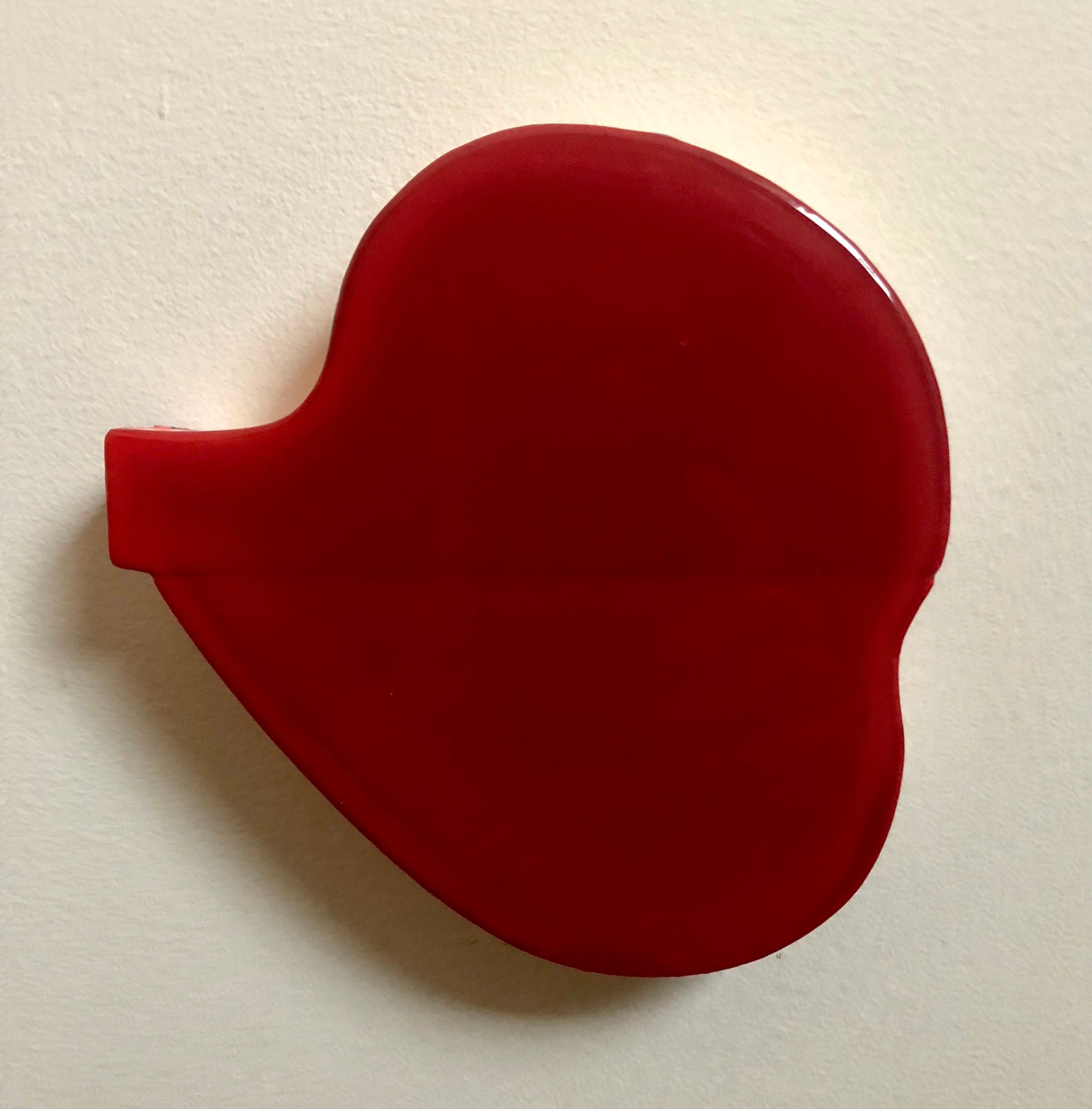
The young family moved to Park Slope in Brooklyn, and English and Harms teamed up in the decorative painting business to support themselves. “We had a loft space on Fifth Avenue, before gentrification, and it was pretty rugged,” she recalls. By the time she got her MFA, English describes her efforts as “fairly mature. I was making large works that had a singular alignment, curving lines inside them, hourglass shapes. The most obvious relationship was with Robert Mangold, but the quality of the line I was making was very sculptural.”
When her second son was born five years later, the couple made the decision to move out of the city up to Cold Spring, NY, close to where Dia Beacon, the ambitious cavernous museum for contemporary art, would soon be established in 2003. “It was this incredible thing that totally transformed the town,” English says. “I was working as a teaching artist at Dia and got to know the collection extremely well. I had been aware of the Light and Space artists, and I soon became much more aware of them.” And of Agnes Martin, who was then near the end of her life and had a gallery devoted to her large austere grid paintings. When she visited in a wheelchair with then-director Michael Govan, Martin told a group that included English: “Be true to yourself.”
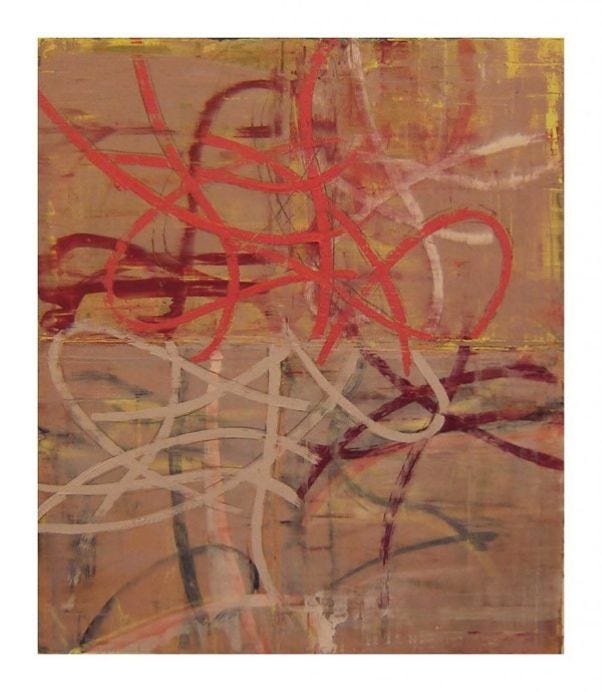
The artist also became involved in a nonprofit called Collaborative Concepts, which offered a space where she started showing her work and curating exhibitions. After her sons went off to college, she says, “I worked harder on the career aspects of my work” From 2000 to 2016, she exhibited consistently in Hudson Valley galleries. In 2017, she was picked up for representation by Kathryn Markel Fine Arts, which helped bring her work to a broader audience. In spite of suffering a bout with breast cancer, English moved into ever more adventurous territory, including a series called “After Guatemala,” whose tangled loops may recall Brice Marden’s “Cold Mountain” paintings from 1989-91.
The artist began making what she calls “tiny sculptural things,” and those led to poured shapes, some of which looked like attenuated musical notations. “With those, I realized I wanted to figure out a way to build up the surface of the work and turned to pouring polymer,” English says.
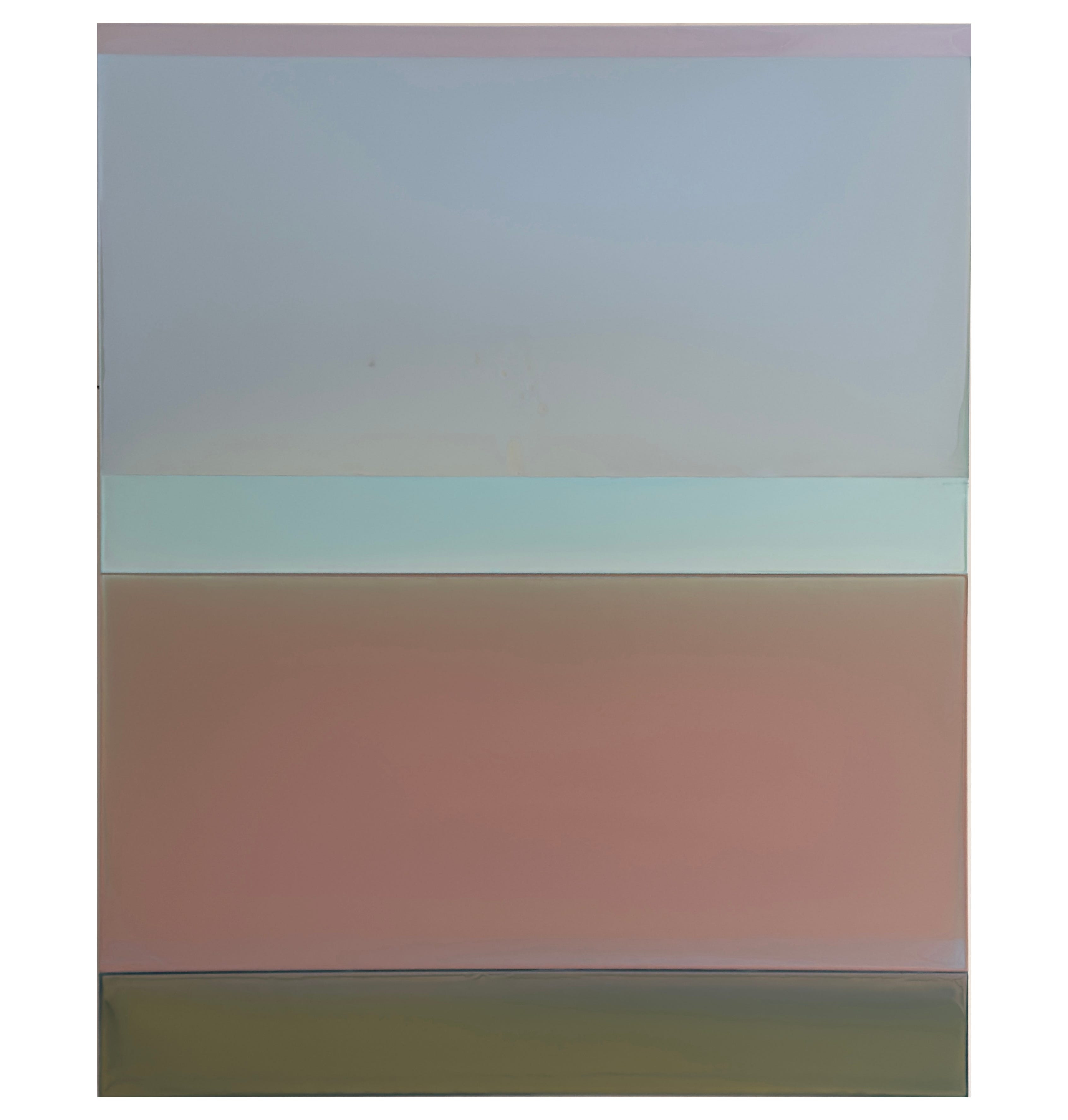
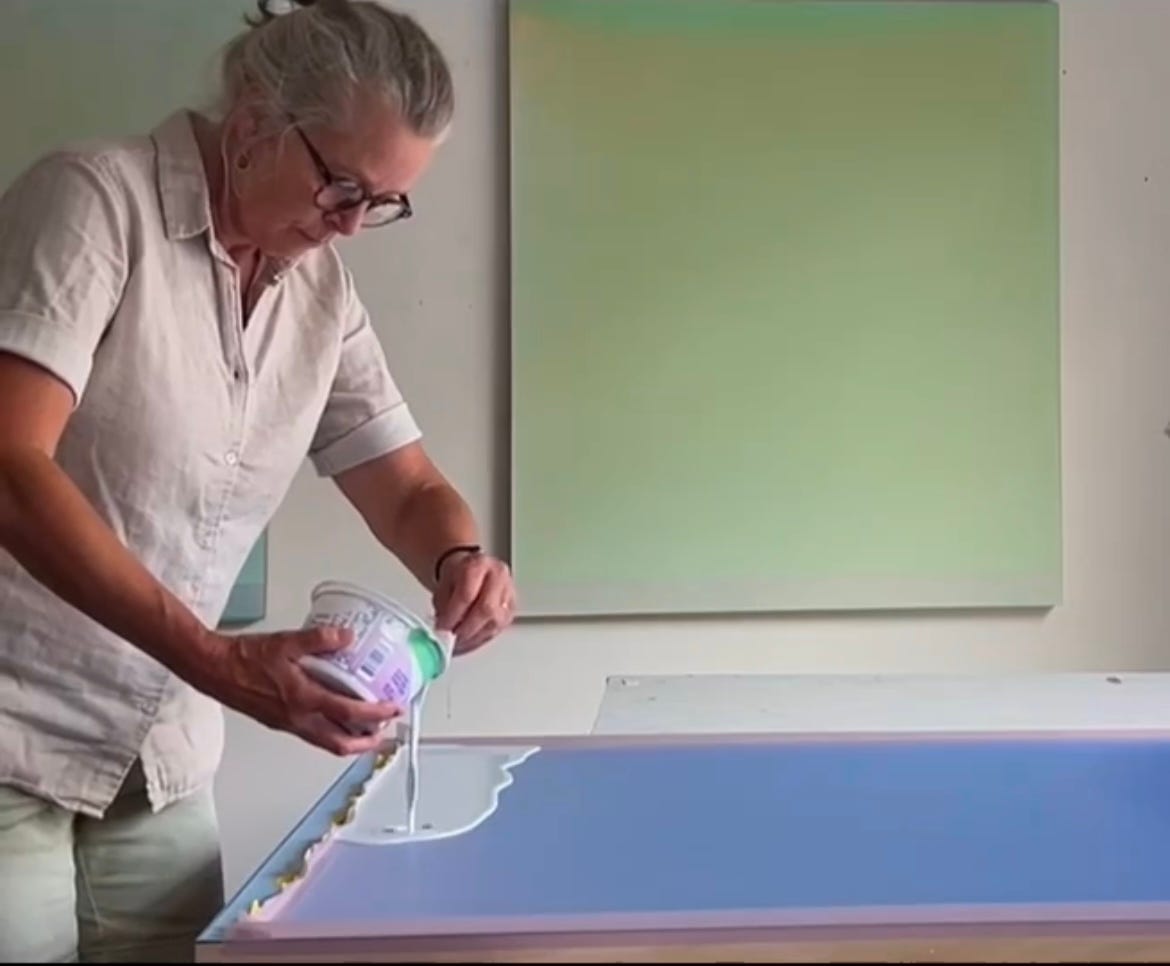
In the last seven years, English has been able to realize a good living from her work and has turned to painting full time (as has her husband, after they retired the decorative art business). Among the galleries that have featured solo shows are her mainstay, Kathryn Markel in New York, Ellio Fine Art in Houston, and K. Imperial Fine Art in San Francisco. Each had a specific theme of sorts that highlights her preoccupations as an artist. For the show called “Weather” at Kenise Fine Arts in Kent, CT, she noted that “the color, light and space in my work is related to shifts in light, atmosphere, temperature and to my daily experience of weather. The noticing and awareness of subtle and not so subtle shifts, including the way natural light manifests in my studio, is a primary content of my work.” As is the weather’s unpredictability. “We deal with daily predictions of what the weather will bring, but the weather proceeds of its own accord….Unpredictability relates directly to my process. The transparent pours by which I build layers of paint on my surfaces begin as predictions; I meditate on a work and then carefully consider the color, degree of transparency, sheen, and thickness of each poured layer.”
In 2020, she won the Mercedes Matter Award from the New York Studio school, and her works are now in the collections of Agnes Gund, NYU’s Langone Art Program, and MD Anderson, among others.
In spite of the multiple gallery shows (and two slated for 2027), the possibilities for the future abound with promise. “I don’t feel like I’m anywhere near bored with exploring what there is to explore,” she says. “I continue to find new directions, and even though I’m showing a lot of work, every painting is a new investigation.”
An excellent read with great visuals! Thank you, Ann!
Ann, I really enjoyed this thoughtfully composed profile about an artist with whom I was not familiar. Thank you!