
What Is a Drawing?
The answer these days is far from simple

Of all the mediums available to artists, I’m still most smitten with drawing. Whether it’s cave art made with a blackened stick, a quick sketch by Edgar Degas, or even a pint-sized tableau on an iPad, drawings offer an immediacy unavailable in more considered types of visual communication. Between 2016 and 2021, I ended up publishing nine iterations of the post “What Is a Drawing?” on the website for Vasari21.com. Such is my affection for the subject that in the near future I will be reprising and updating them on Substack. It’s a subject that never gets old.
The late, great, often cantankerous art critic Robert Hughes more than once bemoaned the apparent decline in standards for draftsmanship. “In the 45 years that I’ve been writing criticism there has been a tragic depreciation in the traditional skills of painting and drawing, the nuts and bolts of the profession,” he told members of London’s Royal Academy of Art in 2004. He added, almost paradoxically, that “drawing never dies, it holds on by the skin of its teeth, because the hunger it satisfies—the desire for an active, investigative, manually vivid relation with the things we see and yearn to know about—is apparently immortal….”
I couldn’t agree more with the latter part of his sentiments, but on the question of the first, I think Hughes was grievously mistaken. There are still plenty of artists who can do Old Master-ish portraits and academic life studies, who have learned all the tricks and twists of line and shading and highlighting. But they are generally not the ones who are doing the most interesting or challenging work in the medium we think of as drawing.
If Hughes, who was notoriously hostile to most contemporary art, were still around today, if he could cruise around the readers of Vasari21, he would see that drawing is still very much alive among artists, but the definition of what makes a drawing a drawing has expanded. And the ways in which artists approach drawing can be radically different, as are the ends they arrive at.
David Herd, a Scottish painter whose portraiture sometimes seems an update on forebears like Gainsborough or Reynolds, claims you “can make a successful image with ‘bad’ drawing.” Sometimes, he says, he draws meticulously onto a surface before he starts to paint, but the “drawing is very often eradicated completely and replaced with the drawing of paint, where I still consider what I do to be a form of drawing but with larger marks and hue and value included.”
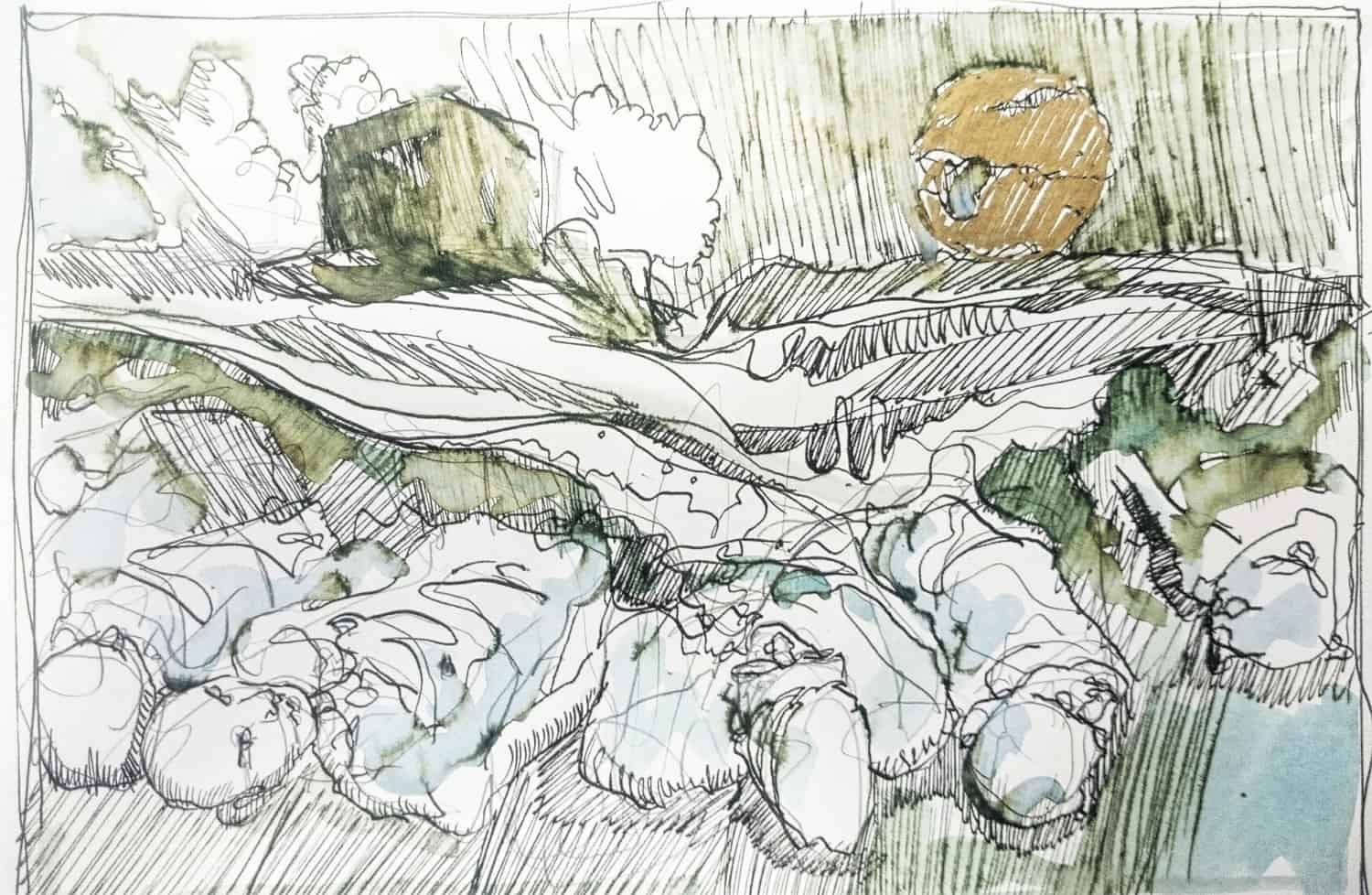
Leslie Kerby writes: “I’ve made a number of pieces recently that I consider paintings when they are finished. However, I start each work with a drawing giving myself a light structure from which to work. The painting takes over as I layer watercolor, some acrylic and occasionally collage and pen and ink for emphasis. I've been painting on both sides of the vellum to think about light in the image and in the case of the collage elements, they are adhered to the back side of the image to reveal a softer look overall. These are small works. ten by ten inches. I started the series during lockdown (and continue today) when our worlds were suddenly smaller...about the size of a computer screen. They're intimate portraits of spaces that friends shared with me during that time where they were finding some peace and subsequently ‘outdoor portraits’ of how we started using space again (series is titled ‘Inside/Out’) as we accessed public spaces again.”
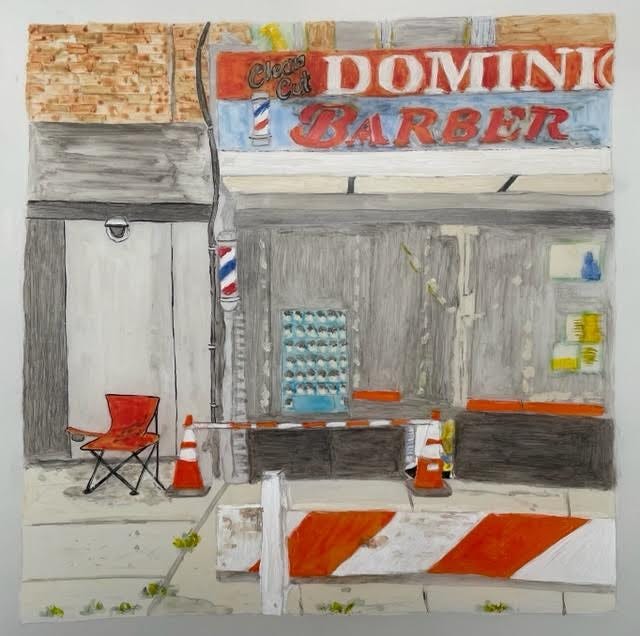
A good friend of the author’s, whose drawings were part of our last show at the Wright Contemporary in December 2024, Gendron Jensen engaged with drawing, and only drawing, for his entire career. Since his days working in a print shop at an abbey in Benet Lake, Wisconsin, he was intensely moved by the remnants of the natural world, most often the bones of animals he found on “rambles” in the woods and countryside. When he stumbled across these, he noted, “It’s an apparition to me. Here’s this place where death happened to the creature, and its relics are scattered on the ground. Some of them summon to me, they command me to respond. When I’m really involved in the act of drawing, sometimes an odd thing happens. I suddenly see it hurling from hundreds of thousands of miles away, like a UFO from outer space. I become bound up in this wonderful love life with the object; we become as one.”
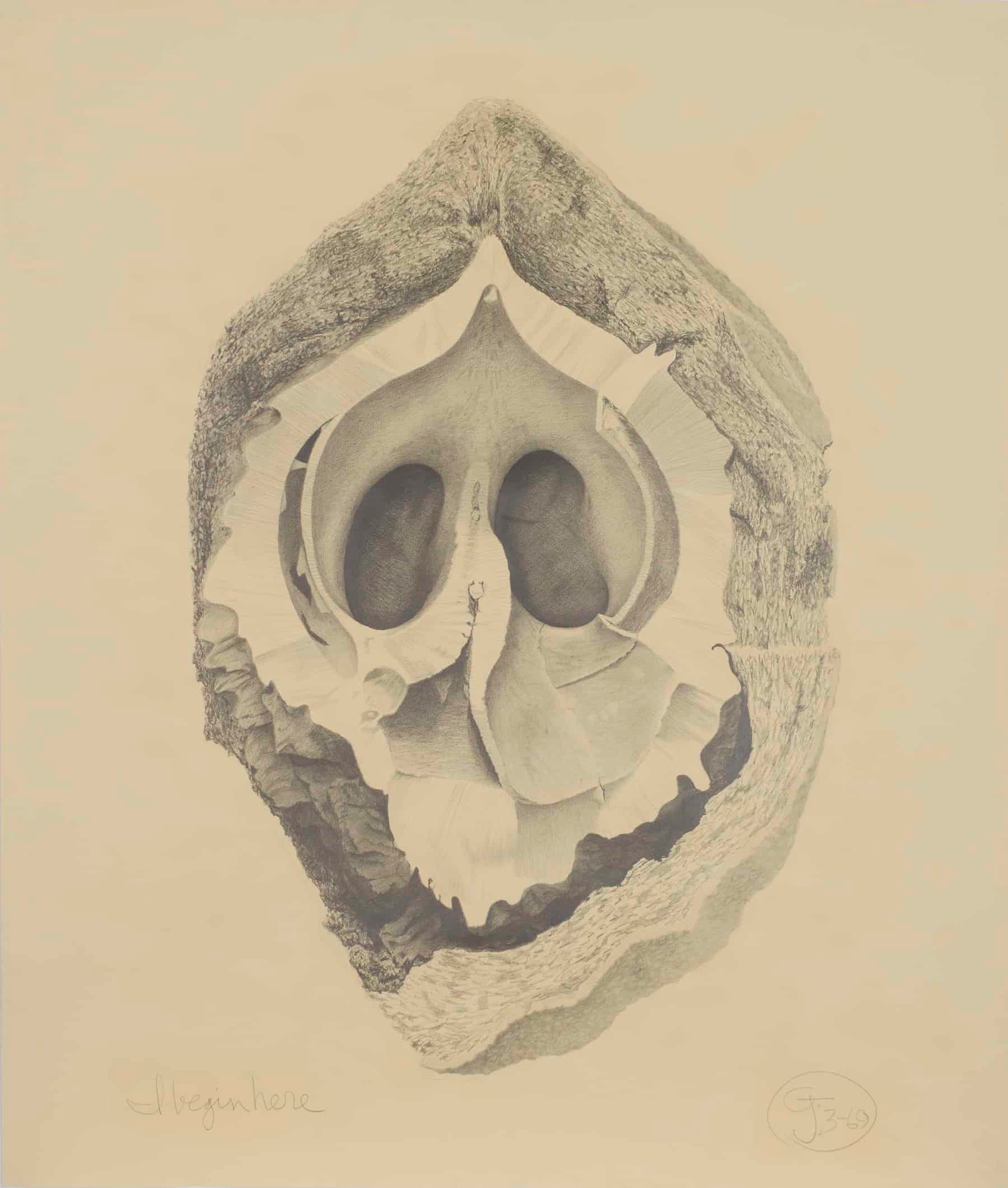
Writes Jonathan Morse: "Drawing creates a kinship with generations past all the way back to the cave painters. Exploring the interaction of analog and digital marks and their interface with organic forms, I visualize the ongoing dance between our human selves and our digital partners as we become increasingly and willingly cyborg, thereby enhancing and extending ourselves through our ever-changing technical abilities...marching skeptically but pliably into the AI/robotic future we cannot fully perceive or anticipate. Marks help me as an artist to plant my flag on the trembling soil, the shifting sand, of our present and uncertain planet. The work often reflects the gradual dissolution of natural forms amidst ongoing and persistent beauty, yet despite an often pessimistic subtext so visualized with its attendant entropy, I reach for a balanced and cohesive, even optimistic, conclusion. Flowers reflect and assert the triumph of the spirit, for even as they wither they remain strong, deliberate and ascendant; their beauty, stamina and adaptability portray the eternal cycles of life on this earth."
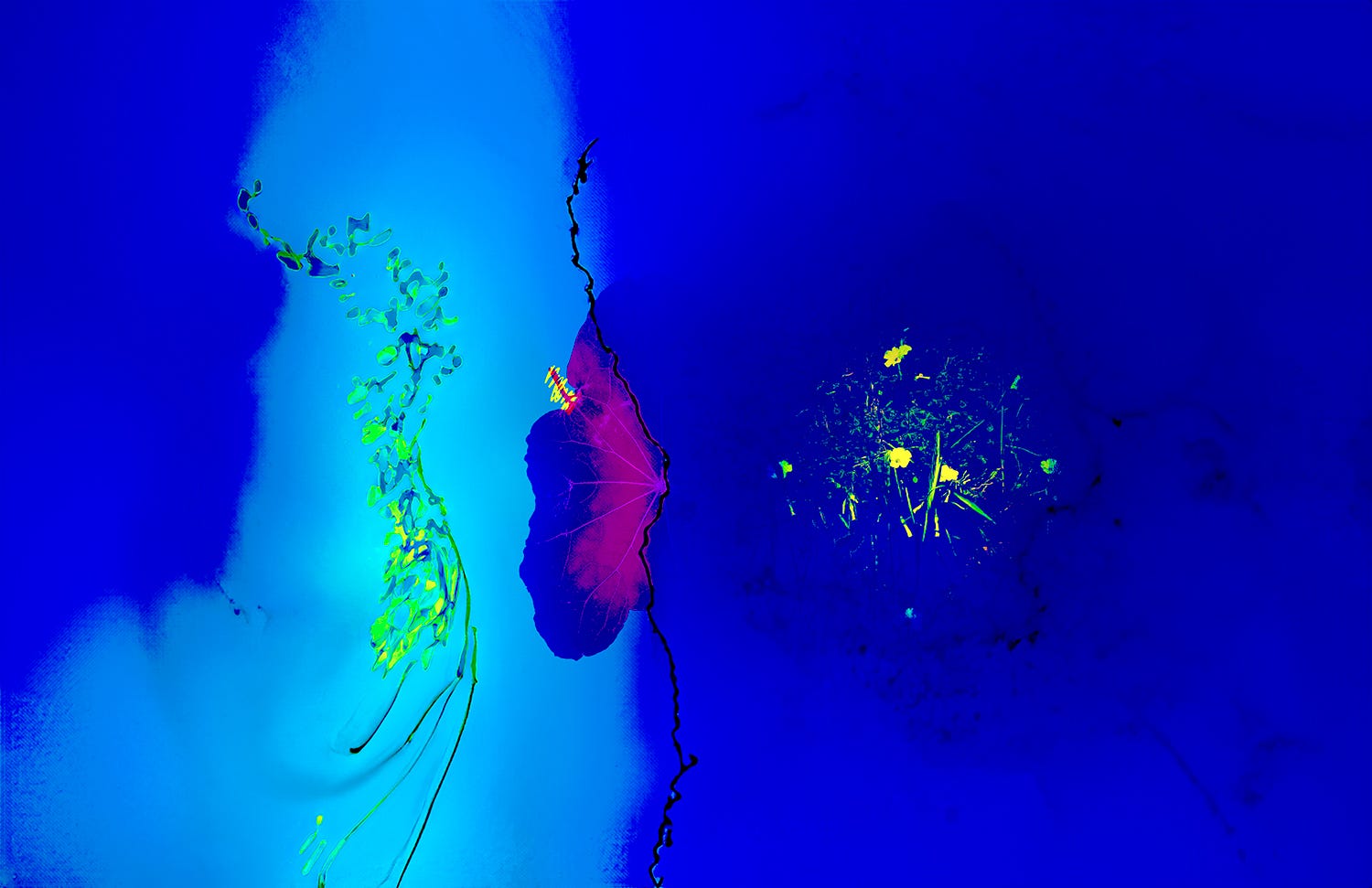
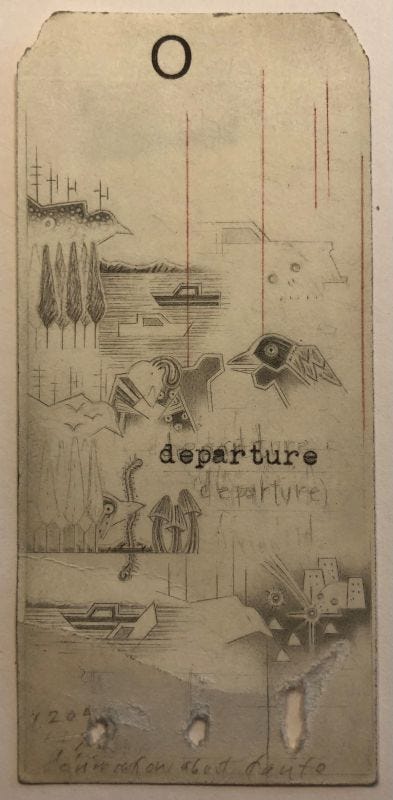
On an extremely small scale, often no more than two or three inches on a side, Marc Baseman creates arcane and mysterious “stories,” the exact import of which tends to be obscure. As I wrote in a profile of the artist for the site, his tiny tableaux boast a cast of odd characters and objects: birds and rodents, guys in business suits, a naked woman with streaming hair, a kissing couple, crenellated towers, hovering helicopters, space ships, magic mushrooms, and wide-eyed cats. It’s a universe as packed with as much incident as a medieval miniature, and like a story from long-ago times, the ultimate meaning may be a mystery (but it’s fun to try to guess at it). Recent works use found materials for a ground, this one an old index card that suggests the kind of tickets that used to be affixed to luggage or packages.
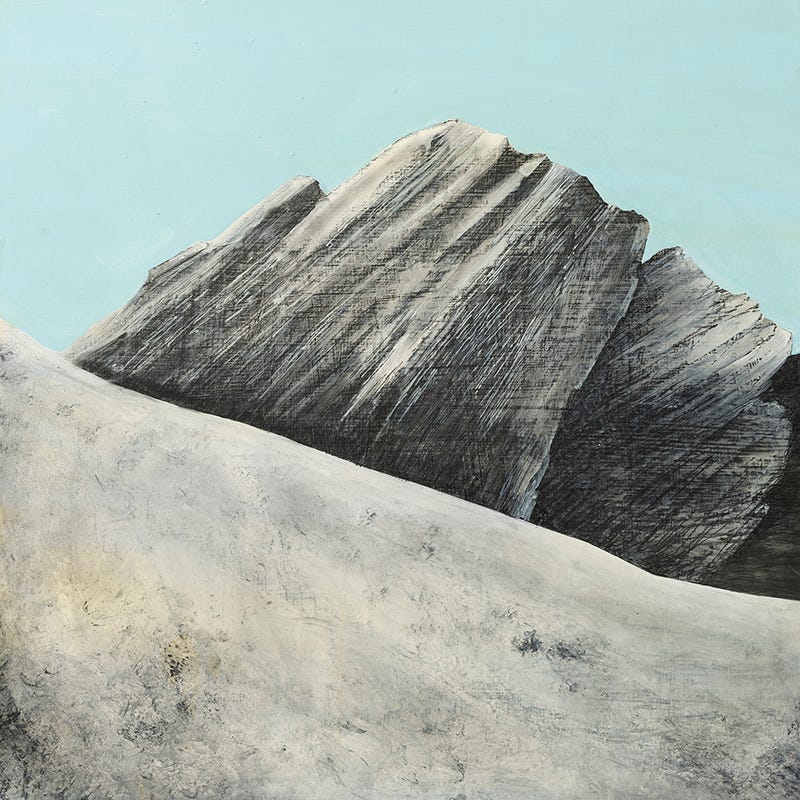
“After focusing for many years on the human hubris of looking toward outer space colonization, I began a new series I call Monuments,” says Lanny DeVuono. “It was inspired by the term agnotology . That word was coined in response to how tobacco companies' in the 1950s and '70s worked to create propaganda to cast doubt about the dangers of tobacco smoke in order to keep their own profits high. Something similar is going on with climate change. So for Monuments I deliberately isolate bits of nature—mountains, water, land—to remind us what is verifiable.
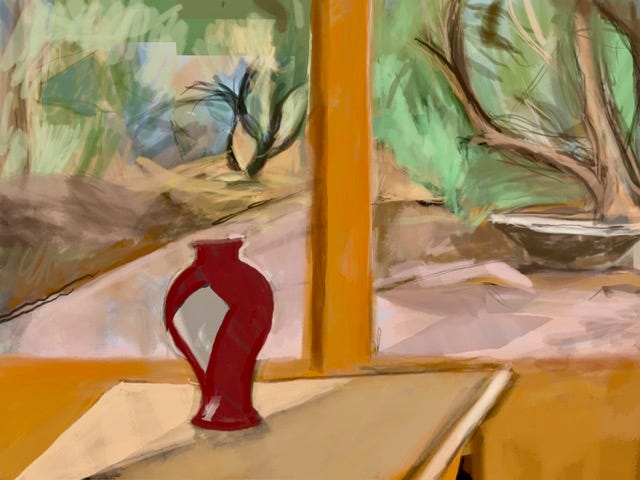
“I began sketching on a digital tablet in 2007, when the first generation iTouch emerged,” writes Susan Pasquarelli. “My drawing screen was a mere three-by-two inches, and it perfectly suited my nature of wanting to have art with me all of the time. Previous to this, I made drawings in sketchbooks that now form a sizable pile of personal treasures. I switched to the tablet for so many reasons. I felt like I could do anything with everything on one small screen.
“I sketch every day for at least two hours,” she continues. “It’s enough time to achieve a rough-hewn composition in color. It brings me back to an early love for 17th-century Dutch genre painting, where the everyday takes on a higher meaning as art. With this way of working one can learn. Learn about history, the masters, contemporary life, life alone. I don’t know how long I will draw in this manner. It seems like it can go on forever with its own sense of originality and discovery. I don’t have to think it up or be clever. It’s sketching what I see in front of me at this time in this place. Yes, it’s nature. It’s my visual diary here in Taos where I try and include the weather both inside and out. Simply put, it’s a great teacher for anyone.”
Stay tuned for more drawings in the months to come. The possibilities are almost infinite.
Thanks for introducing new artists into my creative world…
Thank you for continuing to uphold drawing. Yes, in its contemporary nature it is much more than the "old master" skill that it is often associated with. To me, drawing is akin to thinking. It is the visual equivalent of writing or talking. It is the basis for visual communication and while it is often sidelined, it is actually the most important factor in good works of art. Good drawing finds its way into and reveals itself in the best paintings, sculptures, etc. I look forward to reading your future essays on drawing!